Elsevier
Modernising the B2B API Platform for an AI-Driven World
Turning a fragmented collection of technical specs into a cohesive developer product ecosystem—delivering a shippable MVP and AI-ready platform vision in a 4-month sprint.
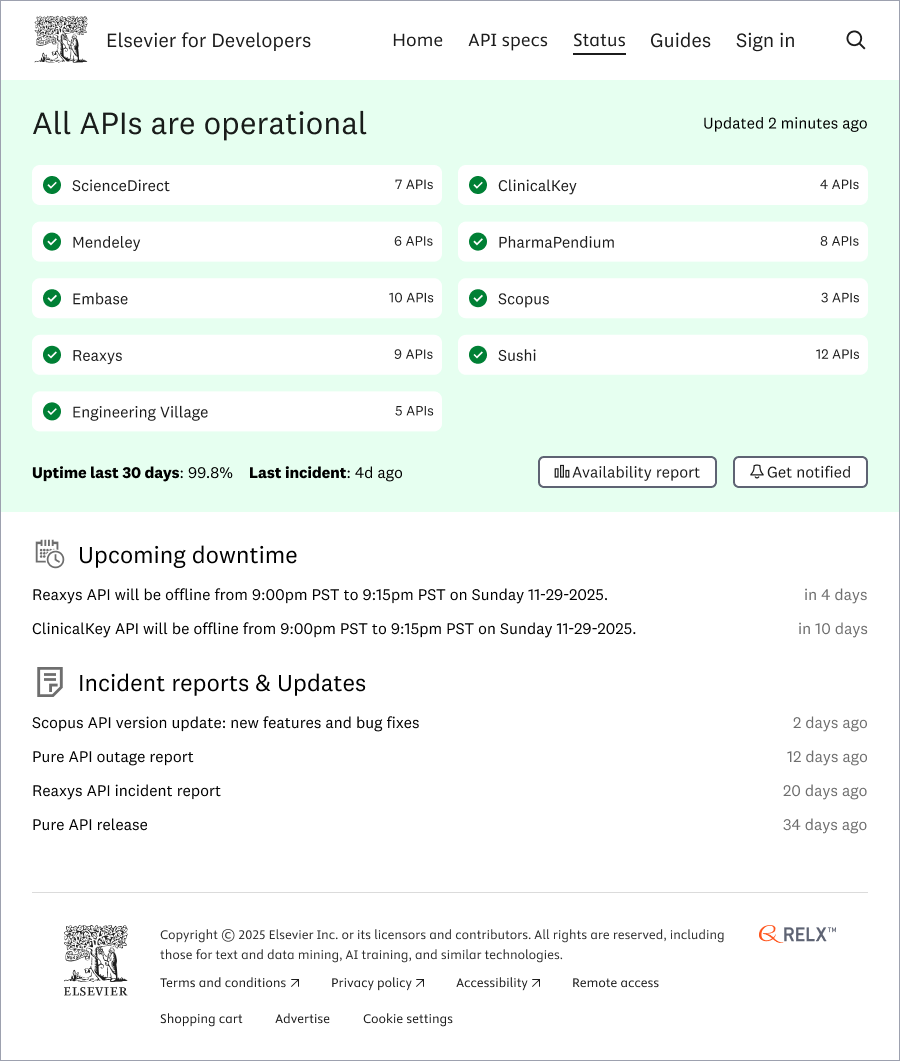
- The Problem: Elsevier’s developer portal had evolved into a fragmented patchwork of ageing pages and raw API specs—creating high onboarding friction for human engineers and poor structure for AI coding assistants.
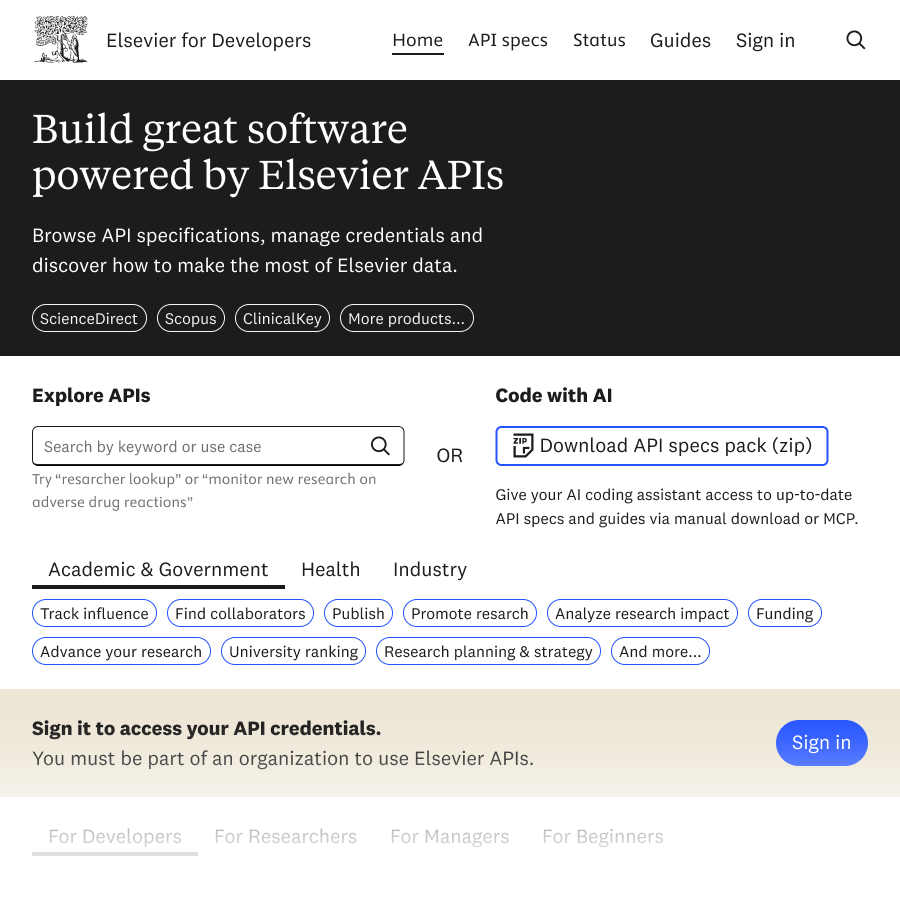
- The Architectural Move: Split the engagement into a two-speed track: delivering a ruthlessly scoped, high-density MVP that engineering could ship immediately, while architecting a tokenized design system and North-Star vision for AI-ready documentation.
- The Impact: Delivered production-ready MVP workflows and a dark/light developer design system in 16 weeks, shifting leadership's mindset from "prettier Swagger docs" to treating APIs as first-class commercial products.
The Surface Ask vs. The Systemic Reality
The Surface Ask
Refresh the visual interface of Elsevier’s developer portal to make API documentation look modern and consistent across research and health products.
The Systemic Reality
Developer experience isn't a coat of paint. Underneath the UI sat fragmented onboarding flows, high cognitive load, and documentation built only for manual reading just as B2B developers were shifting toward LLM-assisted coding workflows.
Key Architectural Bets
1. Job-to-Be-Done Architecture Over a "Swagger Clone"
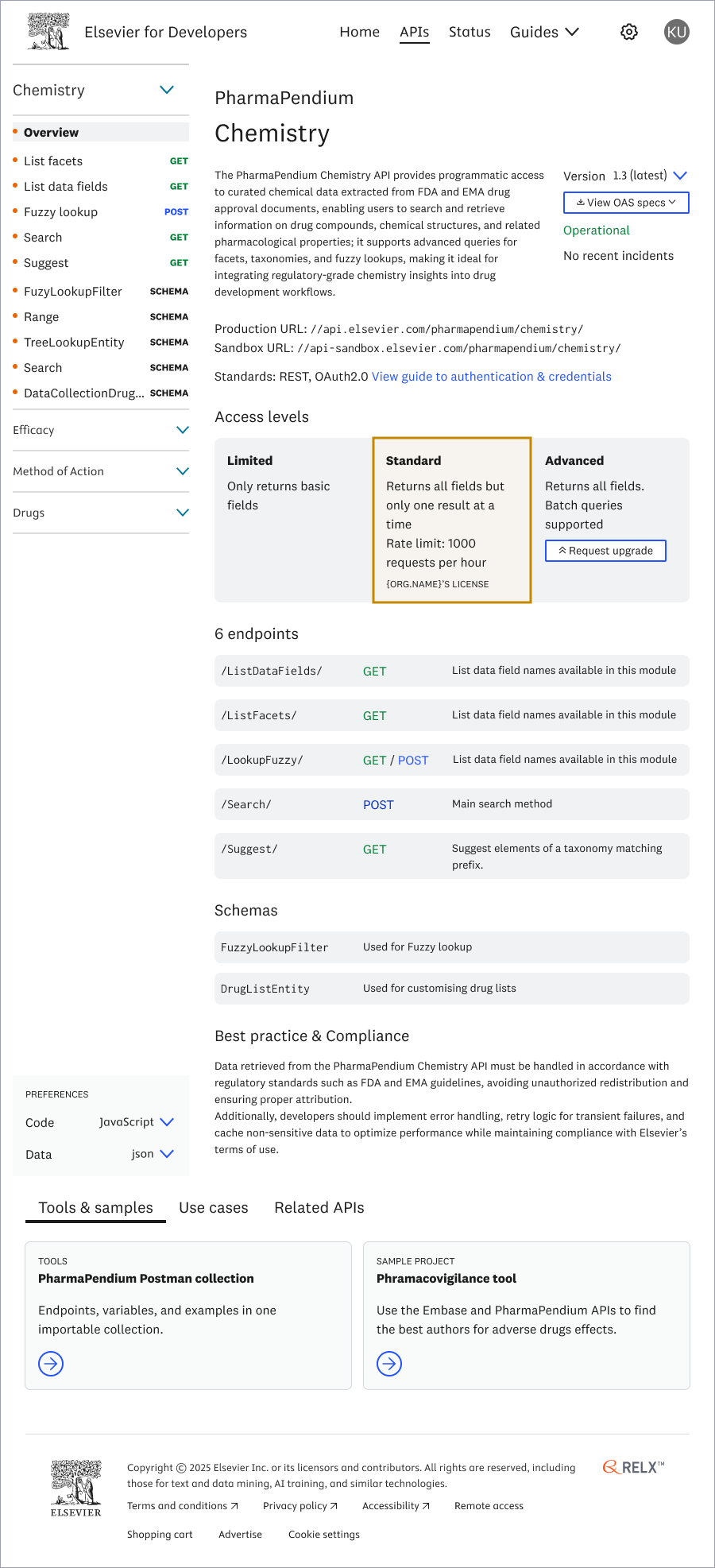
Auto-generated endpoint lists don't teach developers how to solve problems. I restructured the information architecture around real engineering use cases and quick-start integration flows before dropping users into deep schema references.
2. Designing Simultaneously for Humans and LLMs
Developers increasingly consume API docs via coding agents and RAG pipelines. I structured documentation hierarchies, code playgrounds, and schema views so they were effortless for humans to scan and cleanly structured for AI consumption.
3. High-Density Information Ergonomics
Unlike consumer apps that prize sparse whitespace, engineers debugging APIs need high signal density. Drawing on HCI principles, I designed compact, low-noise views that keep auth scopes, parameters, and live JSON responses in a single field of view.
4. Two-Speed Execution (Pragmatic MVP + North Star)
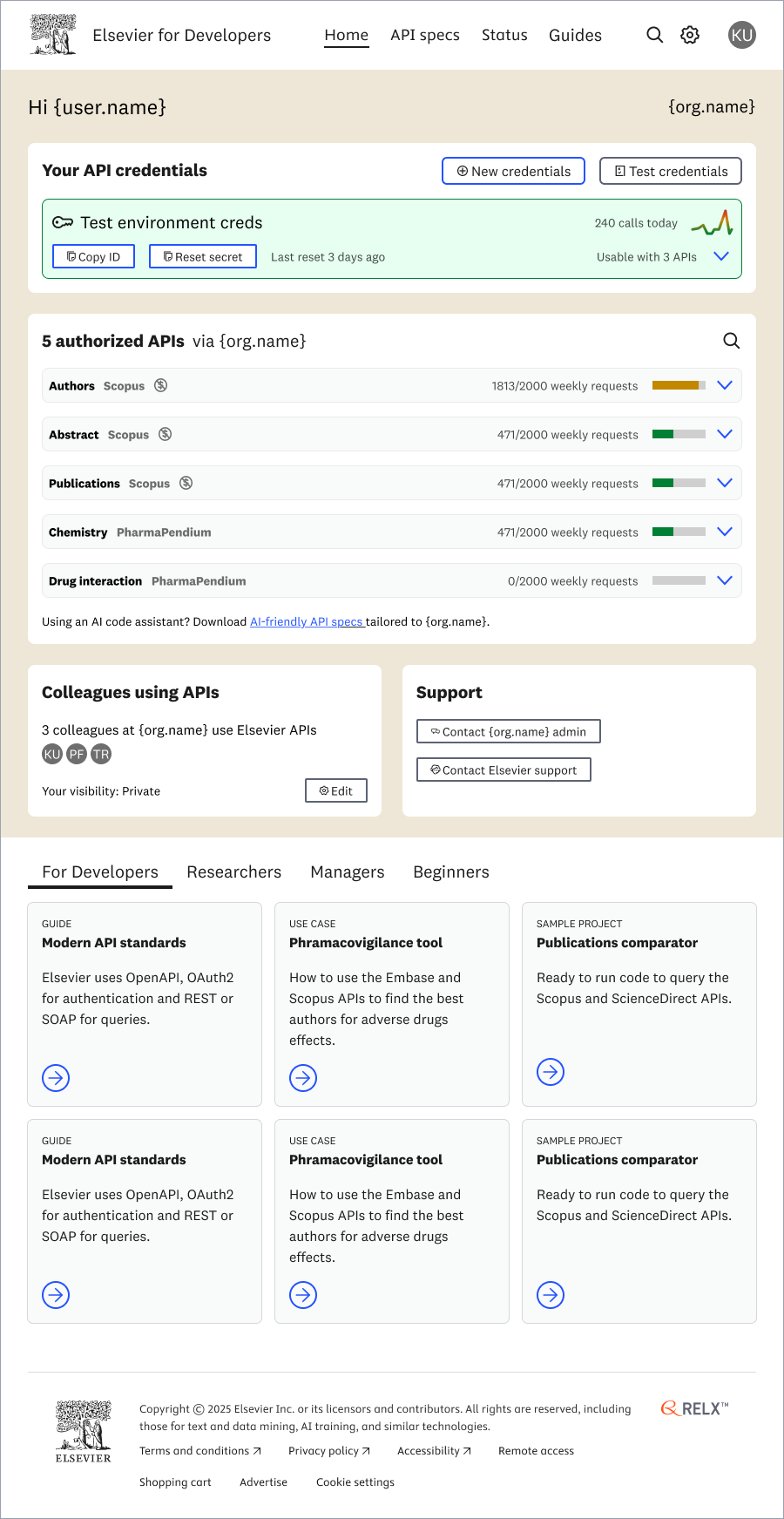
In a 4-month window, boiling the ocean guarantees nothing ships. I ring-fenced a pragmatic MVP within legacy backend constraints while using a North-Star prototype to align stakeholders on self-serve API key governance and telemetry.
Pivots & Hard Trade-Offs
Clean Tokenized Break vs. Patching Legacy UI
Initially, we explored reusing existing legacy portal components to save time. Rapid prototyping showed that retrofitting dense code and schema views into old marketing templates created more friction than starting fresh. I secured buy-in for a clean, developer-specific component library.
Balancing Internal Architect Bias with Developer Reality
Internal platform experts naturally wanted to surface every complex configuration edge case on page one. By grounding design reviews in external developer onboarding journeys, we progressively disclosed advanced settings and prioritised fast "time-to-first-200-OK."
Systemic Impact & What Shipped
- High-Velocity 4-Month Delivery: Handed over a complete, production-ready MVP alongside a validated multi-year platform vision.
- Developer-Grade Design System: Established a tokenized, dark/light-mode component library built specifically for code inspection, schema trees, and operational status dashboards.
- Strategic Repositioning: Elevated the developer portal from an afterthought documentation site into a strategic B2B product pillar.