BBC Metadata Transformation
BBC
Where I Started
The BBC has a vast catalogue of world-class content, but due to poor, fragmented metadata, the organisation only had a vague idea of what it actually contained or how assets performed.
What Was Really Going On
Siloed tools: Teams were trapped in 20-year-old bespoke interfaces with zero shared interaction models.
Hidden stakeholders: Dozens of teams across the BBC were working on metadata in complete isolation without knowing each other existed.
A cold, impartial data model: The underlying linked data technology was technically sophisticated but disconnected from editorial reality—treating tagging as data entry rather than storytelling.
Editorial fatigue: Overworked journalists saw metadata as tedious admin overhead that slowed down publishing.
The Decisions That Shaped the Work
Leading with a Provocative "North Star" Prototype
Instead of starting with cautious, incremental UI tweaks, I managed the creation of an ambitious concept prototype. It purposefully reached beyond what was realistically achievable to give executive stakeholders a tangible vision and secure long-term investment.
Injecting Humanity into Structured Data (Semantic Predicates)
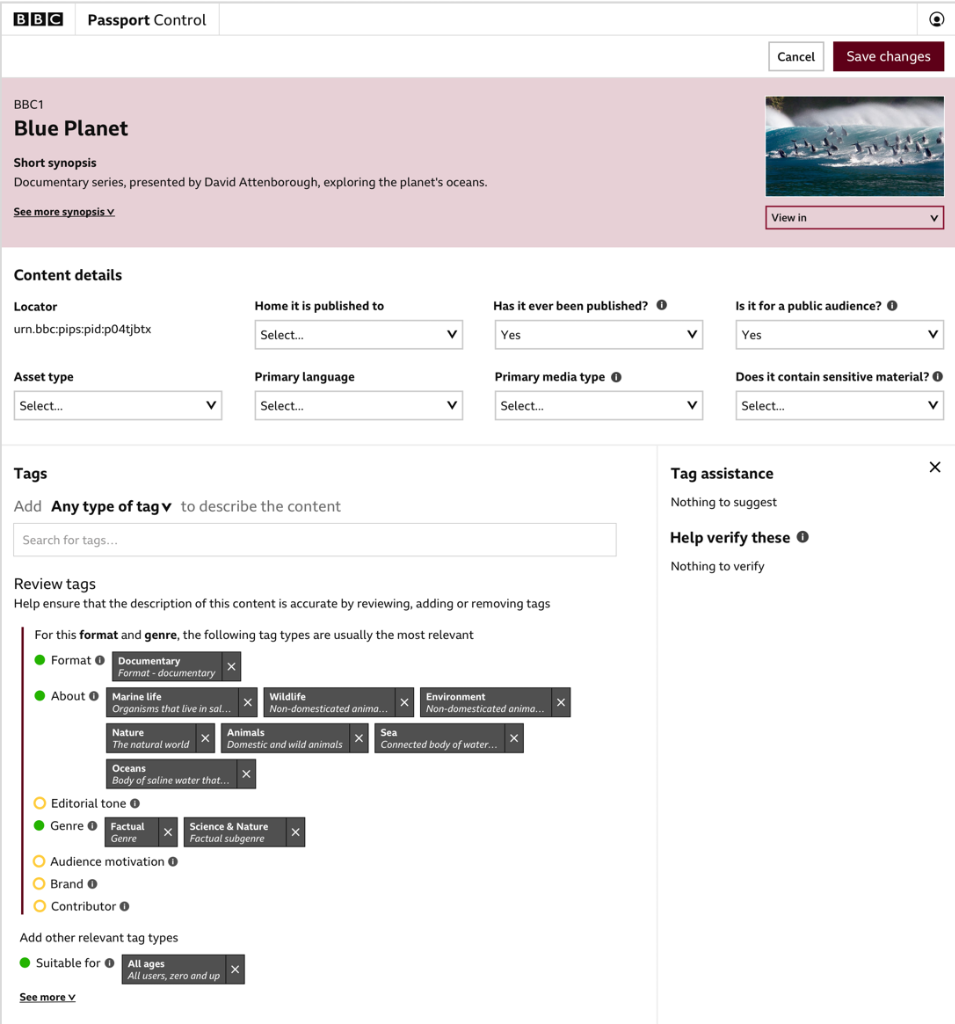
Grounded the ontology in clear editorial semantics. Instead of letting people tag anything to anything, we introduced structured relationships (e.g., distinguishing whether an entity is a contributor, a primary subject, or a fleeting mention).
Meeting Journalists in Their Workflow
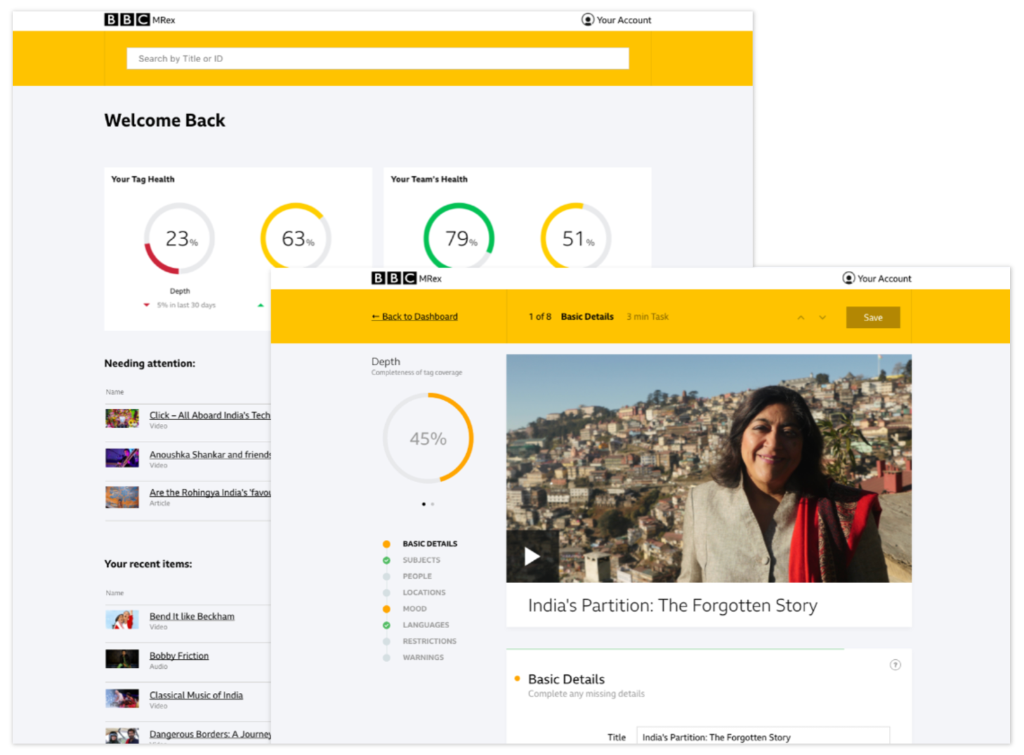
Rather than forcing editorial staff to context-switch into a separate portal, I ensured core Passport tagging components were embedded directly into daily production tools like Optimo.
Designing for the Specialists
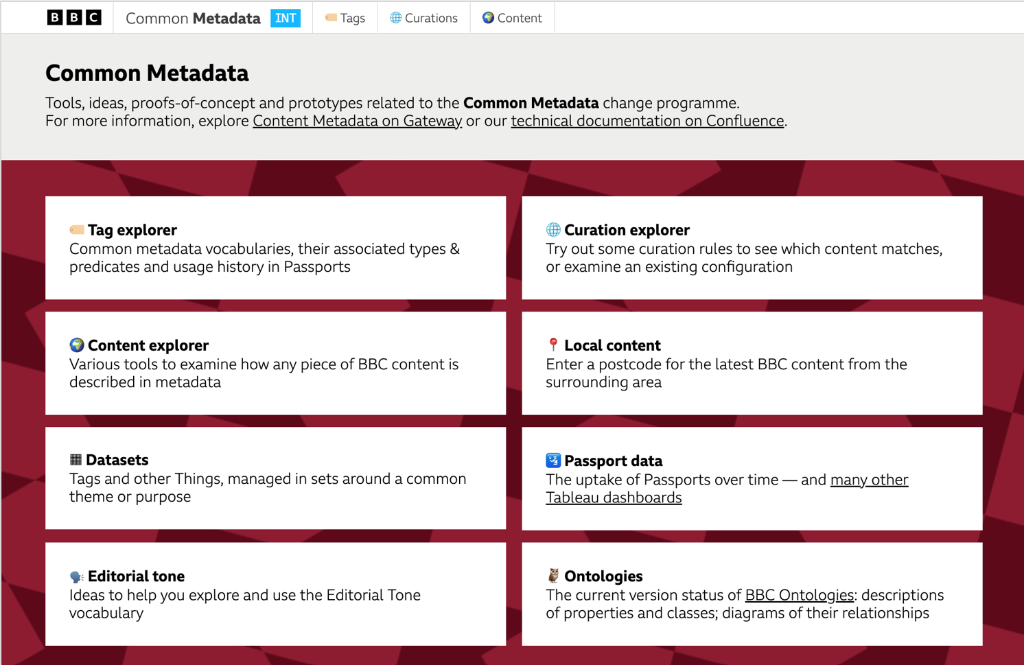
Recommended and designed dedicated taxonomy management tools so data owners had their own expert interfaces to curate vocabularies and ontologies.
When Things Clicked
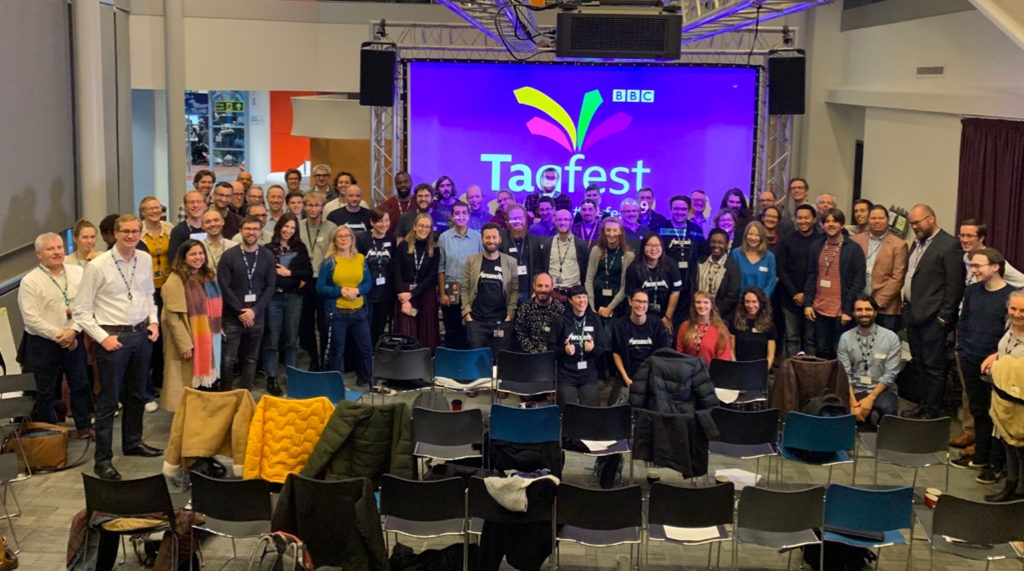
- Tagfest (The 100-Person Catalyst): Organized a 2-day internal summit that gathered over 100 people from across the organization. Seeing that many colleagues in one room—including people who didn’t even realise they were working on overlapping metadata problems—demolished silos overnight and created the social momentum needed to drive the initiative forward.
- The In-Workflow Adoption: Watching journalists adopt the embedded Optimo tagging components without pushback, recognizing that structured tags directly fueled audience discovery on iPlayer and Sounds.
Where I Got It Wrong (and Fixed It)
Initial Over-Flexibility: In an early iteration, we made the system so open and flexible that anything could be tagged with anything.
The Fix: We realized linked data requires guardrails. We introduced strict, semantically meaningful tagging types with dedicated sub-taxonomies (e.g., an asset can have genre: comedy and about: penguins, but never genre: penguins). This brought structure and common sense to what had been a cold, unconstrained data graph.
Trying to Solve Everything via Committee: Early taxonomy alignment discussions stalled in endless stakeholder debates.
The Fix: Separated day-to-day editorial tagging from specialist taxonomy governance tools.
In the End, I Achieved…
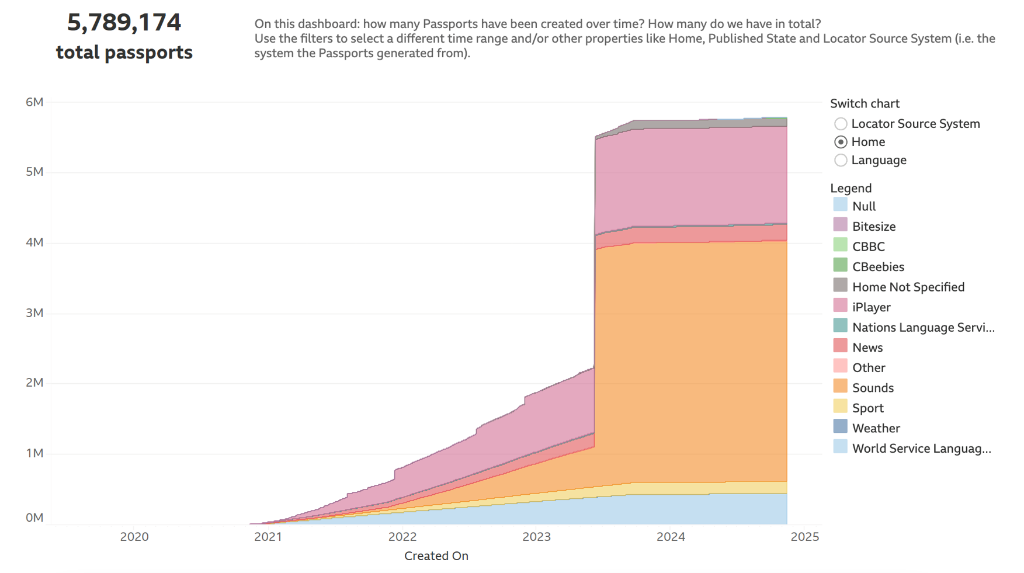
- Transformation at Scale: Over 5.7 million content items tagged and migrated, growing by 2,000+ new passports every single day across BBC News, iPlayer, Sounds, Sport, and CBBC.
- Daily Enterprise Adoption: A core design system and tooling suite now used daily by hundreds of editorial staff.
- Audience Discovery: Drastically improved metadata breadth and quality across the entire BBC catalogue, establishing the foundation for automated content recommendations and flexible media playback.
- Cultural Alignment: Shifted the BBC from viewing metadata as a disconnected technical problem to treating it as a shared, human-centered service discipline.