BBC Flexible Media
BBC
Where I Started
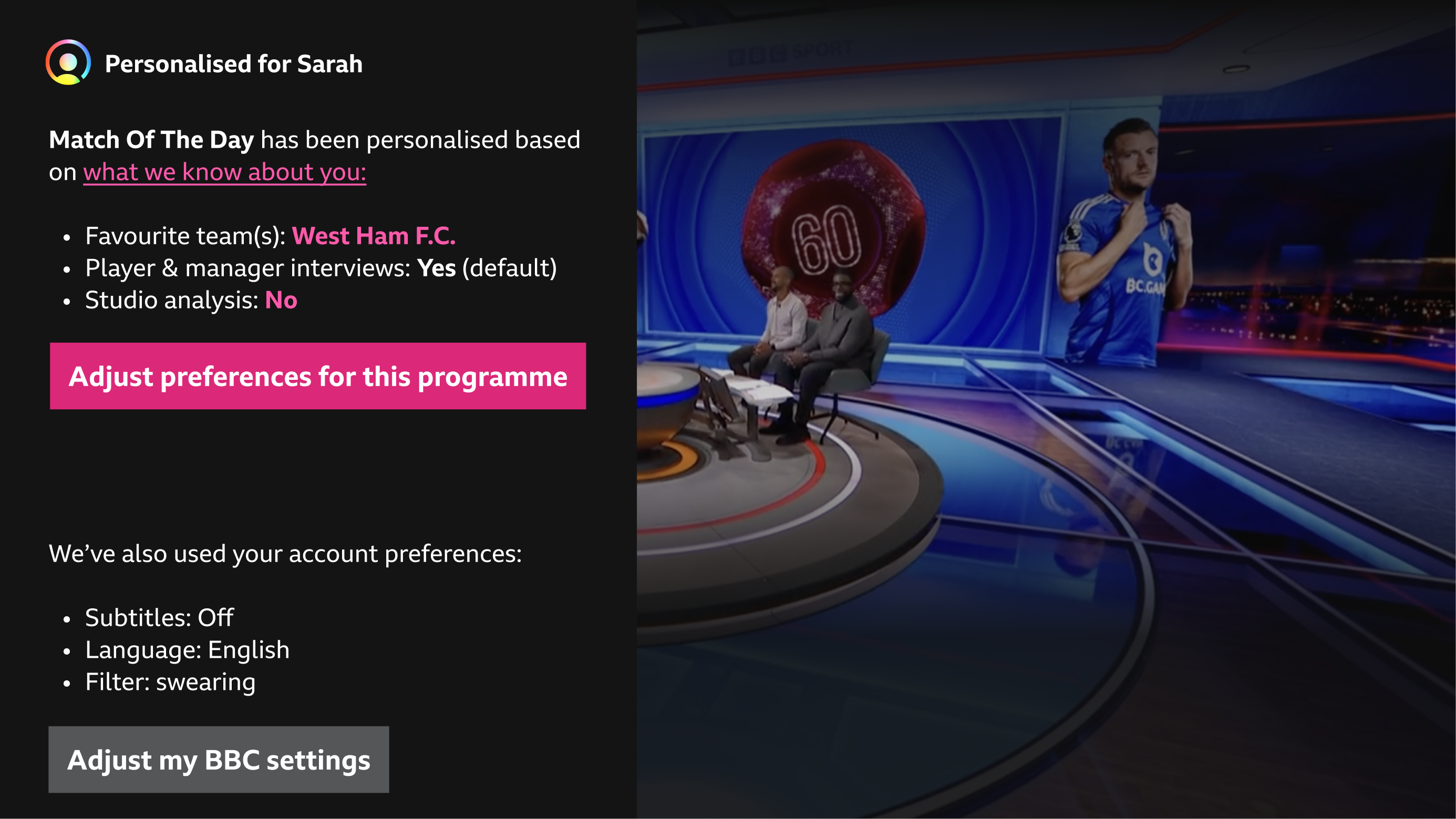
A wealth of foundational user research on personalised content and an expectation to design interactive player experiences.
What Was Really Going On
The "Chicken-and-Egg" Deadlock: Consumer-facing product teams (iPlayer/Sounds) couldn't build rich playback experiences without structured segment metadata, but metadata/backend teams wouldn't invest in tooling until the audience-facing UI existed to justify it.
The Editorial Bottleneck: Rich personalization requires granular chaptering and descriptors, but asking busy editorial staff to manually tag and segment media added severe administrative drag.
Vanity Metrics vs. Real Utility: Research-backed features like chapter skipping directly conflicted with the BBC’s primary metric of increasing total time spent.
The MVP Scoping Trap: Product teams naturally gravitated toward narrow use cases, missing the extensible architecture required for real-world edge cases.
The Decisions That Shaped the Work
Breaking the Deadlock with Immediate Tooling
Rather than waiting for consumer frontend roadmaps, I prioritized delivering working, production-ready authoring tools (Chapters & Moments) that editorial teams could use immediately to start generating structured data.
Integrating Pragmatic AI Assistance
Designed AI capabilities directly into the workflow to analyze transcripts and audio, automatically suggesting segment boundaries, descriptions, and cover images.
Human-in-the-Loop Control
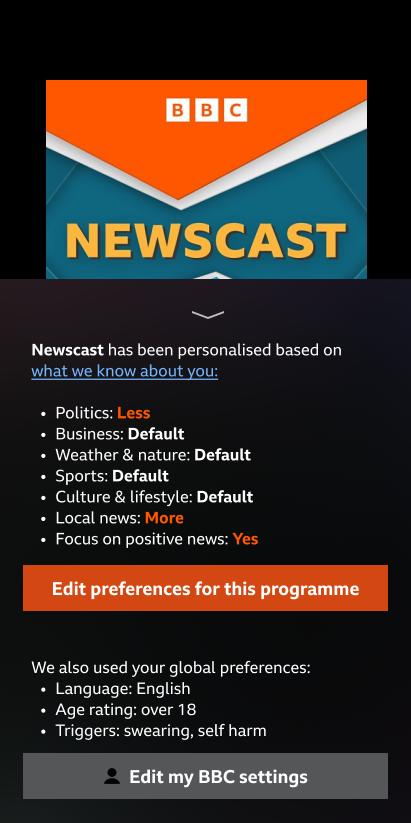
Kept editors firmly in the driving seat by allowing them to review, accept, reject, or modify AI suggestions, as well as select specific analysis engines.
Context-Driven Multi-Device UI
Tailored the playback experience to each device's natural mode of use rather than forcing identical feature parity:
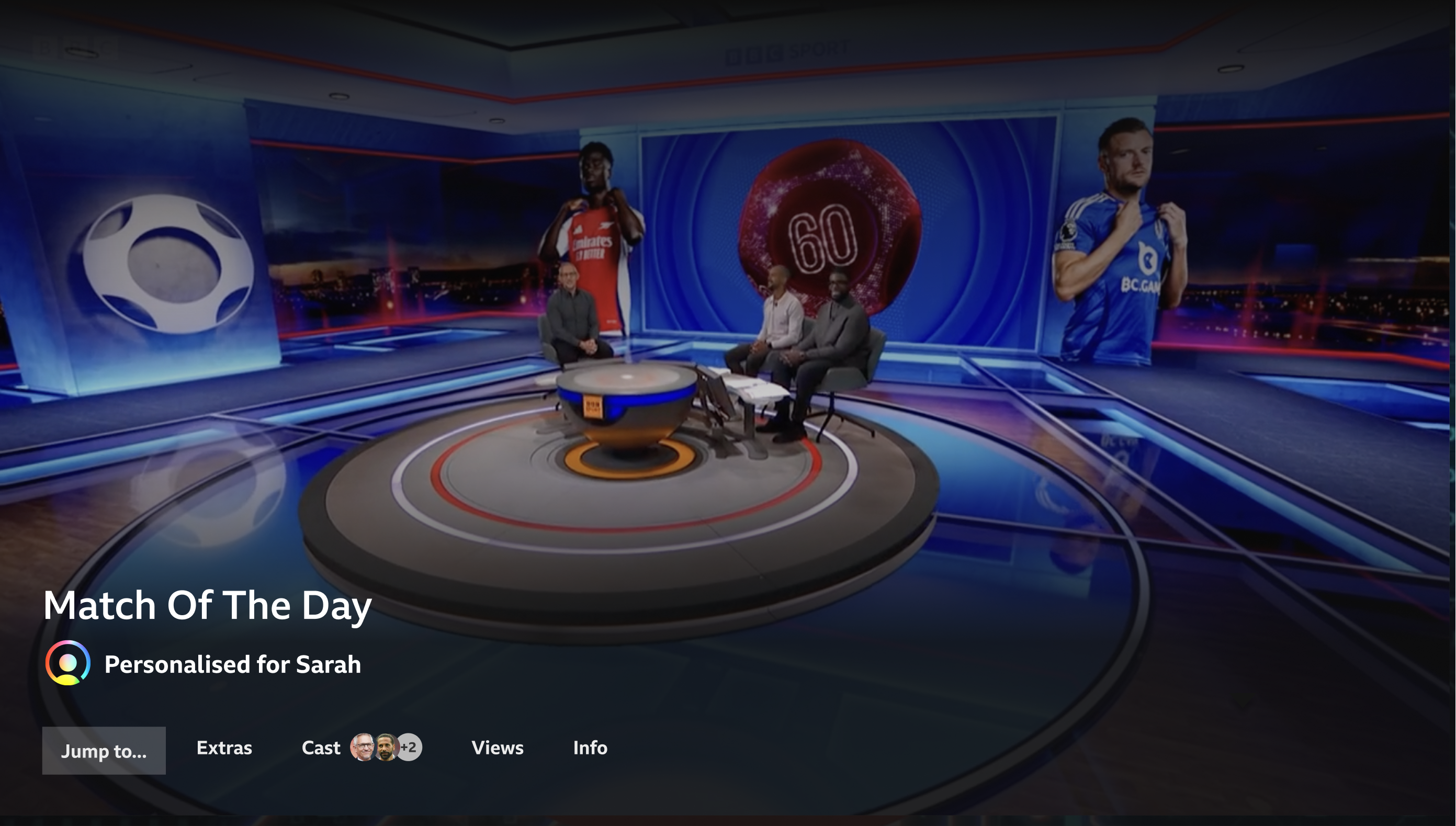
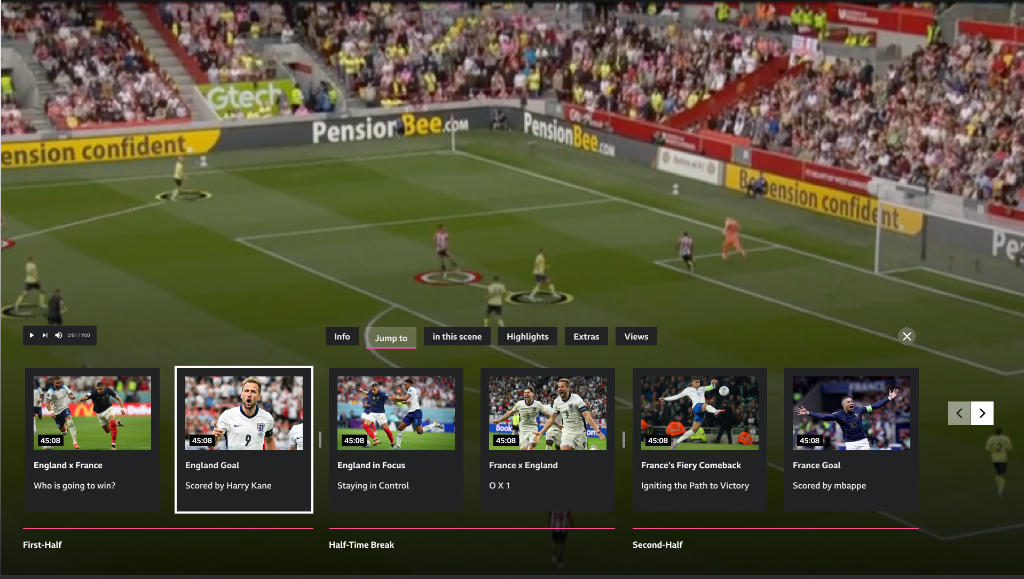
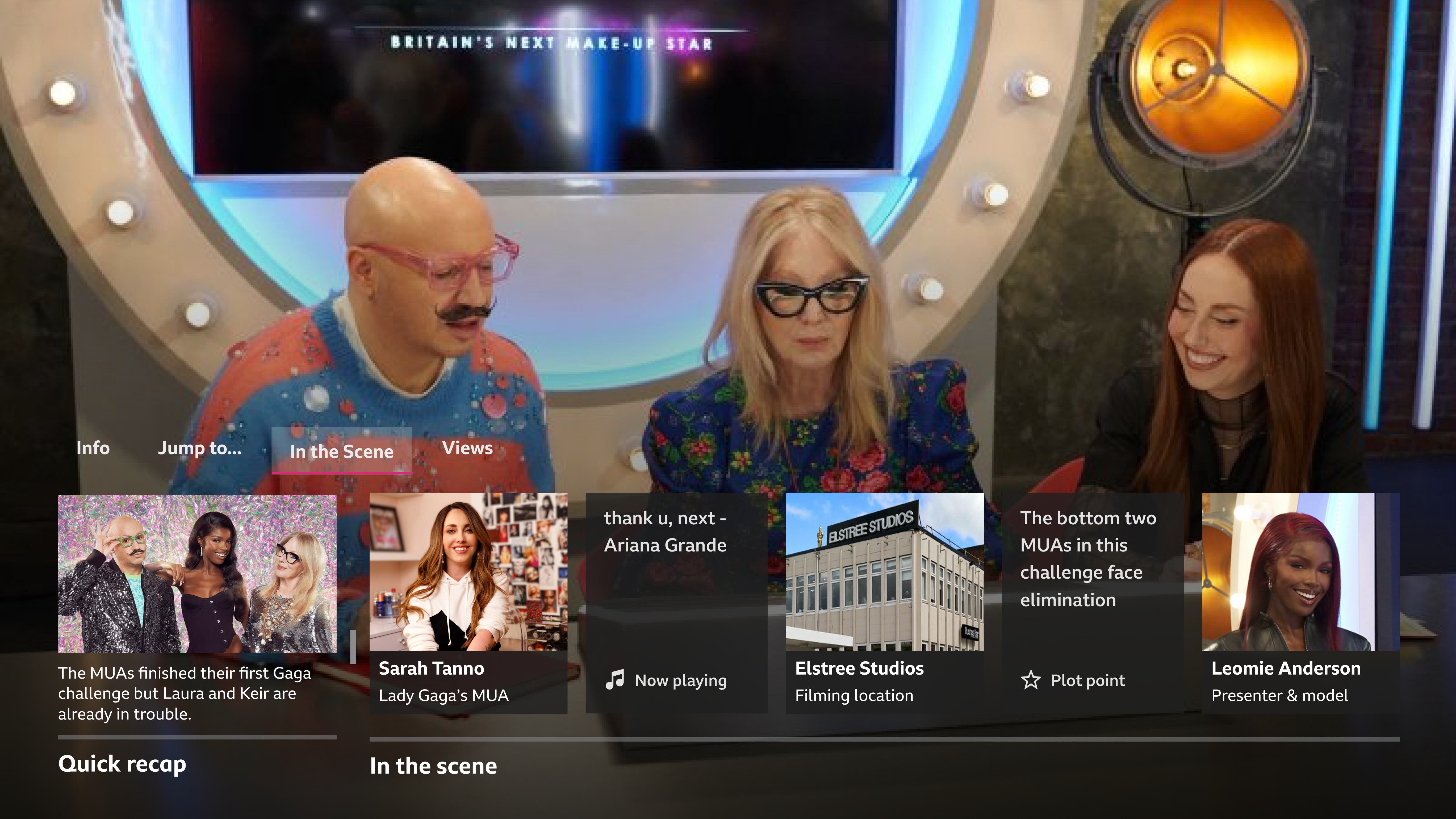
Connected TV: Kept interfaces clean and lean, using bookmarking and "send-to-device" patterns for deeper extras.
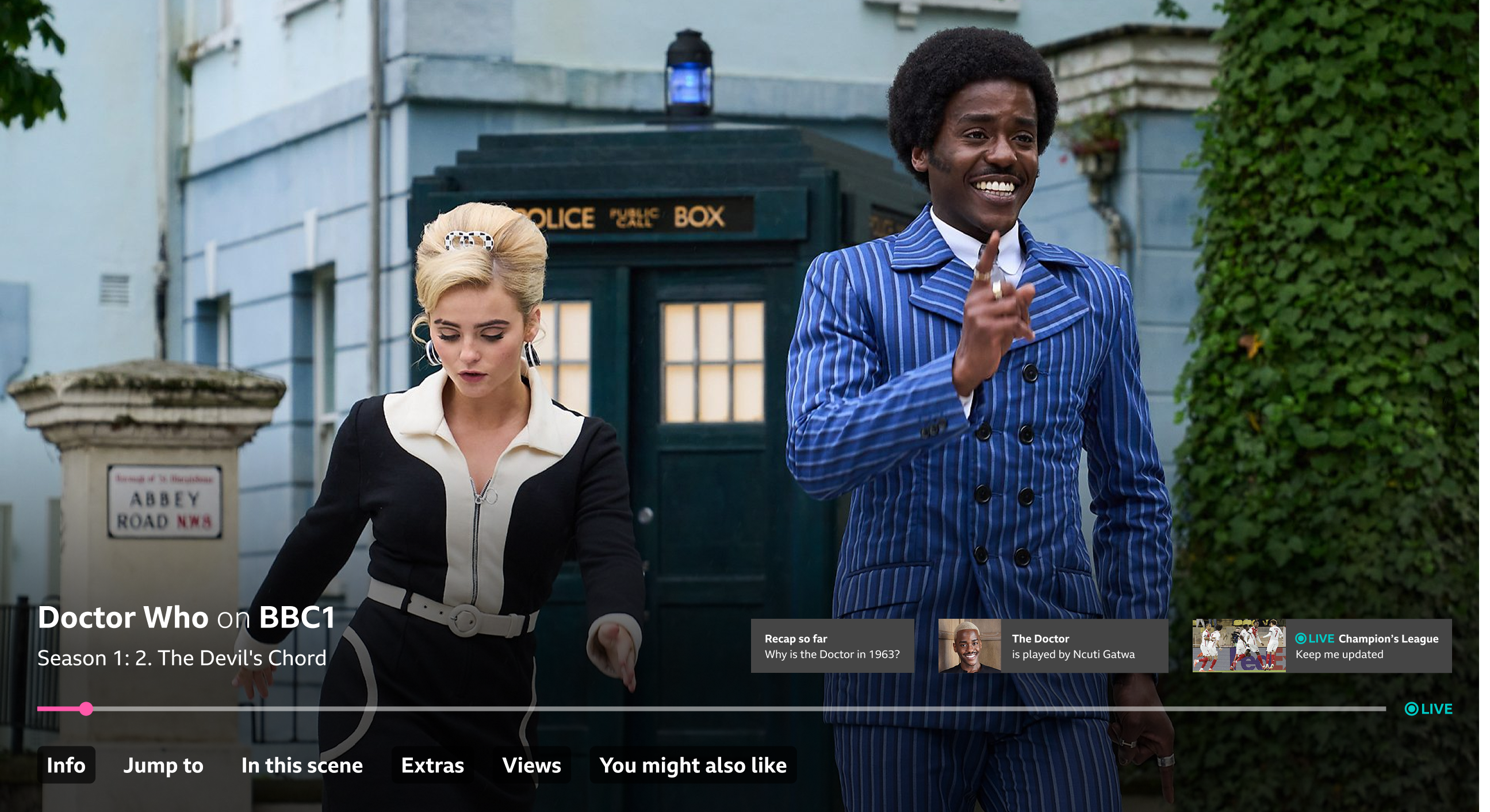
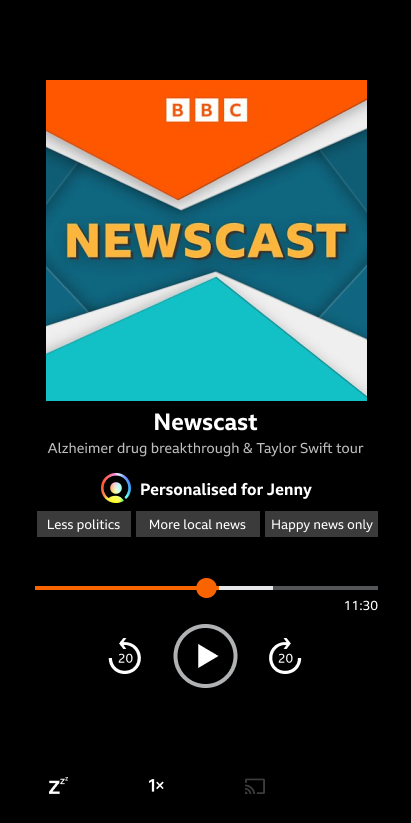
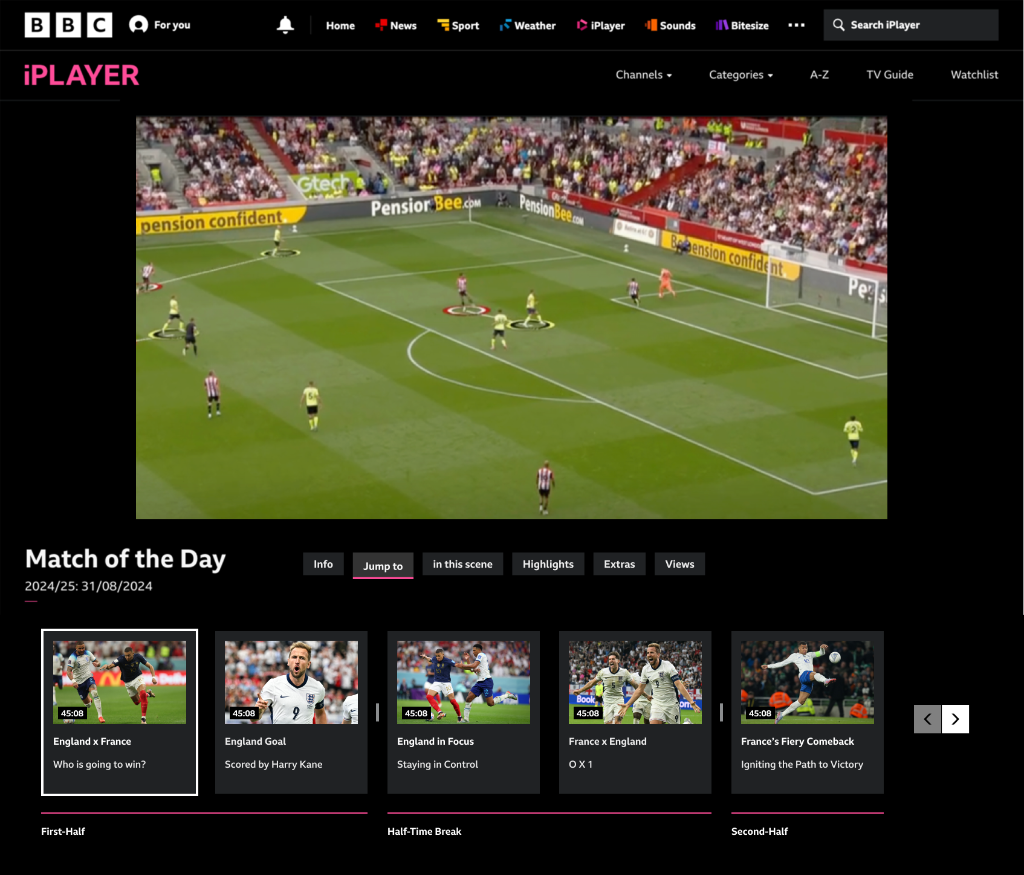
Mobile & Web: Integrated synchronized "in this scene" drawers, non-linear plot recaps, and interactive audio chapters without obscuring the playback screen.
When Things Clicked
- Editorial Adoption in Practice: Placing working AI chaptering tools in front of real editorial staff proved that automated segment suggestions drastically reduced friction, allowing teams to populate metadata effortlessly.
- The Unified Data Model: Demonstrating how one structured piece of segmented content could simultaneously power an interactive podcast chapter skip on Sounds and a live stream switch on iPlayer.
Where I Got It Wrong (and Fixed It)
Initial Assumption of Screen Parity: Early explorations tried to pack the 10-foot TV experience with dense interactive features.
The Fix: Pivoted once usability showed the TV screen should remain clean while companion devices handle deep engagement.
Designing Only for the Happy Path: There was intense pressure to focus exclusively on standard MVP cases.
The Fix: Resisted the pressure and pushed to accommodate complex media edge cases early, which ultimately prevented a fragile UI architecture.
In the End, I Achieved…
- Unblocking the Ecosystem: Delivered working editorial tools that generated real metadata immediately, breaking the dependency loop between backend infrastructure and frontend platforms.
- Strategic Investment & Product Buy-In: Secured core business funding to bring personalization capabilities directly to BBC iPlayer and BBC Sounds.
- Paving the Way Years Ahead of the Org: Established the foundational architecture and interaction patterns that are now trickling into live iPlayer releases over a year later—proving the value of long-range R&D design.